Forest Health: Prescribed Fire


Prescribed burns, also known as prescribed fires and controlled burns, are carefully planned and managed fires used to maintain healthy, resilient ecosystems. Conducted by trained professionals under specific weather and site conditions, these burns help restore ecosystems that depend on fire.
Across the United States, prescribed fire is a widely used land management tool used by wildlife biologists and land managers. It helps reduce the buildup of dry vegetation that can fuel unplanned, destructive wildfires, while also promoting a mix of habitats that support native plants and wildlife.
In addition to ecological benefits, prescribed burns provide valuable, real-world training opportunities for wildland firefighters, helping ensure readiness for emergency response.
How Prescribed Burns Work
Prescribed (planned) burns are only carried out when weather, wind, and environmental conditions meet strict criteria. Most burns are announced about a day in advance.
Each burn is led by experts from DEM’s Forest Fire Program and follows a detailed operational plan. During the burn, staff continuously monitor fire behavior, weather, and fuel conditions. If conditions fall outside of approved parameters, the burn is stopped.
Prescribed (planned) burns depend on weather and wind conditions and are typically announced a day in advance. Prescribed burns help maintain healthy habitats and reduce hazardous fuels, protecting communities from extreme wildfires.
Warmer, drier conditions and longer fire seasons are increasing wildfire risk across the region. In 2025, Rhode Island experienced more than 60 wildfires. To address this growing risk, DEM is expanding its use of prescribed fire and continuing complementary efforts such as shaded fuel break projects to reduce wildfire intensity. By increasing the use of prescribed fire, Rhode Island is aligning its land management practices with neighboring states and strengthening regional efforts to support ecological health and climate resilience.
2026 Prescribed Burn Unit Details
RIDEM's Forest Fire Program plans to conduct low-severity prescribed burns on state lands in Exeter, West Greenwich, Coventry, Richmond, Glocester, Jamestown, and South Kingstown. Weather permitting, the first prescribed burns of 2026 will begin the first full week of April.
DEM burn managers are targeting parcels at
- Arcadia Management Area, Exeter
- Big River Management Area, West Greenwich
- Carolina Management Area, Richmond
- Durfee Hill Management Area, Glocester
- Dutch Island, Jamestown
- Eight Rod Farm Management Area, Tiverton
- Great Swamp Management Area, South Kingstown.
- Nicholas Farm Management Area, Coventry
Press Release: Fighting Fire with Fire: DEM Resuming Prescribed Burns (Published on Monday, April 06, 2026)


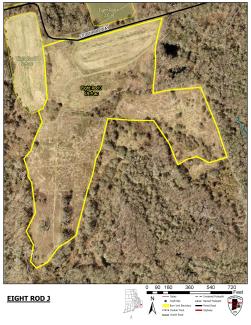


Exact dates are announced on relatively short notice because they depend on the weather. Burns only happen when conditions are safe and effective, such as the right fuel moisture and wind.
Smoke levels vary during the prescribed fire operation and are modeled beforehand. Each prescribed burn requires an air quality permit issued from DEM’s Office of Air Resources, where environmental scientists review the proposed fire for conditions and approve or restrict operations as needed. Some smoke may reach outside the burn area, but burns are planned for weather that limits smoke impact.
The burns are timed to minimize impact on native wildlife, and techniques are used to make it easier for animals to move out of the area. Fast-moving animals like deer and rabbits can easily move away from the area, as the burns will be unidirectional and slow, providing time and space for wildlife to leave the burn units. At the time of the burns, slow-moving animals, like reptiles and amphibians, will be resting in their winter hibernacula, where they will be safe from the flames. Many animals have adapted techniques to survive low-intensity forest fires, since fires were a natural and regular occurrence in the past. Overall, the prescribed burns will benefit wildlife by improving habitat quality.
By regulation, tree stands installed on state lands must be removed by March 31 each year. If you have any hunting equipment (trail cameras, tree stands, blinds, etc.) within these areas, please remove them. DEM’s Fire Program searches for hunting equipment within burn units before beginning prescribed fires to mitigate potential damage.
As a safety precaution, please refrain from approaching burn units during the prescribed burn operations to avoid distracting the fire crews and unnecessarily occupying emergency personnel.