Study to Examine PFAS Impacts on Stocked Trout
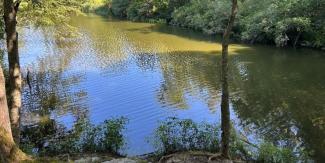
The study is taking place at Upper Melville Pond in Portsmouth, also known as Thurston Gray Pond, from May 4 through July 2. To protect the integrity of the research, the pond will be closed to fishing during that period.
The study timeline was selected to avoid affecting the opening day of trout season. Lower Melville Pond will remain open to fishing during the study, but it will not be stocked.
DEM and the Rhode Island Department of Health (RIDOH) are partnering with the US Environmental Protection Agency (EPA), Roger Williams University (RWU), and the Town of Portsmouth on a new study to better understand how PFAS may accumulate in stocked trout.
Why this study is happening
Upper and Lower Melville ponds were originally built by the US Navy as drinking water reservoirs for Naval Station Newport. The ponds are located near the former Melville Fuel Defense Support Point, where firefighting foam containing PFAS was used in the past.
Sampling conducted by DEM found elevated PFAS levels in both ponds. This study will help us better understand how quickly PFAS builds up in stocked fish living in affected waters.
The study was originally planned to begin before the trout fishing season opened, however the Blizzard of ’26 delayed the schedule.
What the study will involve
This is the first study of its kind in Rhode Island. It will track PFAS accumulation in the tissue of stocked trout over time.
As part of the study, DEM will:
- Anesthetize and fin-clip stocked trout
- Stock the fish in Upper Melville Pond
- Work with Roger Williams University to collect trout samples every two weeks
- Transport samples to RWU and EPA labs for testing
Researchers will also collect water and sediment samples for PFAS analysis.
How the results will be used
Results are expected to be finalized next year and will help guide future public health and environmental decisions.
The study is being conducted at no cost to the Town of Portsmouth. Funding is being provided by RIDOH and RIDEM.
For more information about eating fish safely, visit: RIDOH’s Eating Fish Safely Page